
Evidence-based medication-assisted treatment (MAT), including Suboxone, to help manage withdrawal symptoms, reduce cravings, and support long-term recovery from addiction.
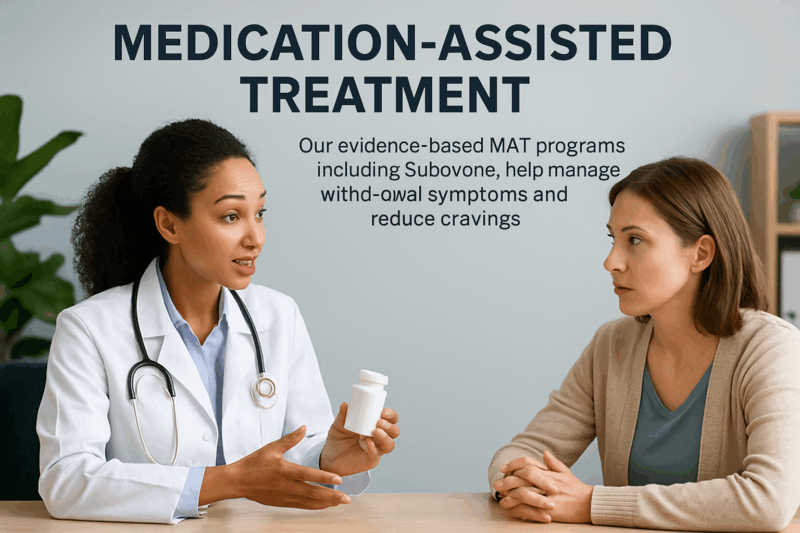
Medication-assisted treatment (MAT) is an evidence-based approach that uses carefully prescribed medications, such as Suboxone,
along with counseling and support to help people recover from opioid and other substance use disorders. At Detox & Recovery,
our MAT programs are designed to make withdrawal safer, reduce cravings, and give you the stability you need to focus on rebuilding your life.
MAT is not about “replacing one drug with another.” It is about using proven medications in a structured, medically supervised way to support long-term recovery and reduce the risk of relapse, overdose, and other complications.
What Is Medication-Assisted Treatment?
Medication-assisted treatment is a comprehensive treatment approach that combines:
- Medications that act on the same brain receptors as opioids or other substances, but in a controlled and safer way.
- Counseling and behavioral therapies to address the emotional, psychological, and behavioral aspects of addiction.
- Ongoing support and monitoring to help you adjust medications, manage side effects, and stay engaged in recovery.
At Detox & Recovery, medication-assisted treatment is used as part of a broader care plan that may also include
24/7 medical detox, inpatient rehab programs,
and aftercare support. We tailor each MAT plan to the unique needs, goals, and medical history of the person we are treating.
Who Can Benefit from MAT?
Our medication-assisted treatment programs are designed for adults who are struggling with:
- Opioid use disorder involving prescription pain medications, heroin, or fentanyl.
- Dependence on other substances where medications can play a helpful role in reducing withdrawal symptoms or cravings.
- Repeated relapse after traditional detox or abstinence-based approaches.
- Strong cravings that make it difficult to stay engaged in treatment or daily responsibilities.
A thorough assessment with our team helps determine whether MAT is appropriate, what medication may be best, and how it fits into your overall treatment plan.

MAT Medications We Use: Including Suboxone
At Detox & Recovery, we focus on evidence-based medications and careful medical oversight. Our providers may use:
Suboxone (Buprenorphine/Naloxone)
Suboxone is a combination of buprenorphine and naloxone used to treat opioid use disorder. It works by:
- Binding to the same receptors in the brain as opioids, helping reduce cravings and withdrawal symptoms.
- Having a “ceiling effect,” which lowers the risk of misuse and respiratory depression compared to full opioids.
- Including naloxone to discourage misuse by injection.
When part of a structured medication-assisted treatment plan, Suboxone can help stabilize your brain and body so you can focus on therapy,
rebuilding relationships, and planning for a healthier future.
Other Medications (If Clinically Appropriate)
Depending on your history and needs, our medical team may discuss other medications that support recovery or manage symptoms such as anxiety, sleep issues, or depression.
We only prescribe medications when we believe the benefits outweigh the risks and when they can support your overall recovery goals.
Medication decisions are always made together with you after a thorough evaluation. We will explain your options, possible side effects, and how each medication fits into your treatment plan.
How Medication-Assisted Treatment Works at Detox & Recovery
Our medication-assisted treatment program follows a structured process designed to keep you safe and informed at every step.
1. Comprehensive Assessment
Before starting MAT, we complete a detailed assessment that looks at:
- Your substance use history, including types of substances, doses, and duration.
- Past withdrawal experiences, overdoses, or previous treatment attempts.
- Medical history, current medications, and allergies.
- Mental health concerns such as anxiety, depression, or trauma.
- Your goals, concerns, and preferences regarding medications.
This information helps our providers determine whether medication-assisted treatment is appropriate and which medication and dosage may be safest and most effective.
2. Medical Detox and Stabilization (If Needed)
Many people begin MAT after completing 24/7 medical detox, where their body is safely cleared of substances while withdrawal symptoms are carefully managed.
In some cases, MAT may begin during detox itself under close medical supervision, especially for opioid use disorder.
3. Starting Medication and Monitoring
Once it is clinically appropriate to start medication-assisted treatment:
- We begin with cautious dosing and adjust slowly based on your response.
- We monitor for side effects, ongoing cravings, and overall comfort.
- We coordinate medications with your therapy schedule and daily routine in treatment.
The goal is to find the lowest effective dose that reduces cravings and withdrawal symptoms while allowing you to function and participate fully in treatment.
4. Counseling and Behavioral Support
Medication-assisted treatment at Detox & Recovery is always combined with counseling, education, and holistic support. While medications help stabilize the body and brain, therapy helps you:
- Understand triggers and high-risk situations.
- Build coping skills for stress, cravings, and emotions.
- Address underlying issues such as trauma, grief, or mental health conditions.
- Rebuild relationships and healthier daily routines.
You may receive this support during our inpatient rehab programs or through coordinated aftercare services once you leave a higher level of care.
5. Long-Term Planning and MAT
Medication-assisted treatment is not a “quick fix.” For many people, remaining on MAT for an extended period—sometimes months or longer—significantly reduces the risk of relapse and overdose.
Decisions about how long to continue MAT are made together with your provider, based on your progress, stability, and preferences.
When it is time to reduce or stop medication, we plan a slow, supervised taper to minimize withdrawal symptoms and maintain your recovery as much as possible.
Why Medication-Assisted Treatment Is Evidence-Based
Multiple studies have shown that medication-assisted treatment for opioid use disorder can:
- Reduce illicit opioid use.
- Lower the risk of overdose and death.
- Increase retention in treatment and engagement in counseling.
- Improve overall quality of life for many people in recovery.
Organizations such as the Substance Abuse and Mental Health Services Administration (SAMHSA) and other national health agencies recognize MAT as an effective, research-supported component of comprehensive addiction treatment.
For more educational information, you can visit SAMHSA’s resources on medication-assisted treatment.

Common Myths About Medication-Assisted Treatment
“MAT is just replacing one addiction with another.”
In medication-assisted treatment, medications are prescribed at controlled doses and used under medical supervision as part of a structured treatment plan.
The goal is to reduce harmful use, improve functioning, and support long-term recovery—not to create a new addiction.
“If I use MAT, I’m not really sober.”
Recovery is about improving health, relationships, and quality of life. For many people, MAT is a vital tool that allows them to stay engaged in therapy, work, and family life.
Using evidence-based medication under a doctor’s care is very different from uncontrolled substance use.
“I have to do it all on my own.”
No one is meant to face addiction alone. Medication-assisted treatment, counseling, and support are there to help you succeed, not to replace your strength or willpower.
Is Medication-Assisted Treatment Right for You?
MAT is not the right choice for everyone, but it can be life changing for many people, especially those with opioid use disorder or repeated relapse.
You may want to explore medication-assisted treatment if:
- You experience intense cravings that make it hard to stay in recovery.
- You have relapsed multiple times after detox or abstinence-only treatment.
- You are worried about overdosing or using alone.
- You want a structured, evidence-based approach that includes medical support.
The best way to find out if MAT is a good fit is to talk openly with a provider who understands addiction and these medications.
Start with a Confidential Conversation
Deciding whether to begin medication-assisted treatment is an important choice, and you deserve clear, honest information and support while you make it.
At Detox & Recovery, our team can help you understand your options and how MAT fits into a complete treatment plan.
To learn more about our medication-assisted treatment programs, you can:
- Visit our Admissions page to see how the process works.
- Use our Contact page to send a confidential message or request a call.
- Ask about combining MAT with 24/7 Medical Detox or Inpatient Rehab for a seamless treatment experience.
You do not have to choose between suffering through withdrawal or continuing to use. Medication-assisted treatment at Detox & Recovery can offer a safer, more stable path forward.
If you are ready to explore MAT, our team is here to listen, answer your questions, and help you take the next step toward recovery.
Disclaimer: This page is for general informational purposes only and does not replace medical advice. Always consult a qualified healthcare provider before starting, changing, or stopping any medication or treatment plan.