
Our skill-building classes in rehab turn recovery principles into everyday habits—communication, boundaries, scheduling, money management, job readiness, and self-care—so you leave treatment with tools you can use immediately.
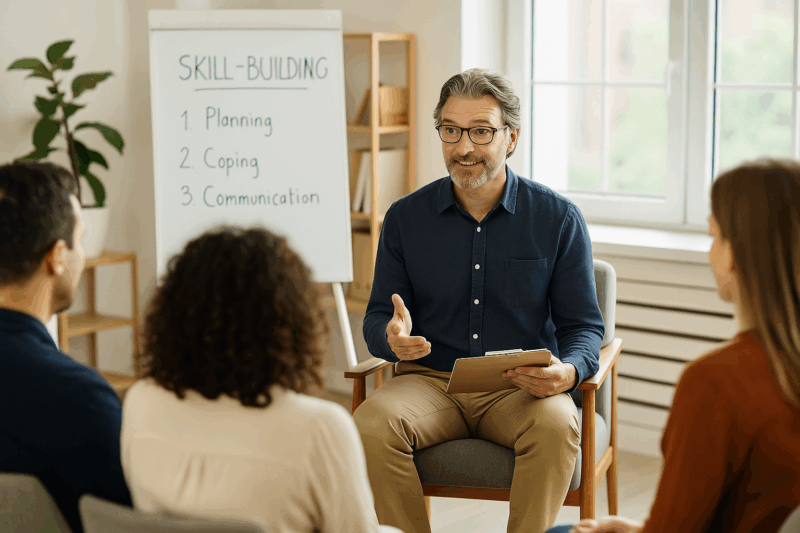
Therapy helps you understand yourself; classes help you operate differently day to day. That’s why our schedule includes structured skill-building classes in rehab alongside Group Therapy Sessions, Individual Counseling, and Holistic Therapies. Each class offers clear steps, brief practice, and take-home checklists you can use during Aftercare & Recovery Support.
Why Skill-Building Matters in Recovery
Early sobriety can feel overwhelming: new routines, new boundaries, and new ways of coping with stress. Knowledge alone isn’t enough—you need measurable actions. Our classes provide:
- Structure: Short lessons with a single goal and clear practice steps.
- Repetition: Weekly themes reinforce habits until they feel natural.
- Accountability: Share a small “next action” and check in at the next class.
- Confidence: Real-life wins—better conversations, steadier schedules, fewer crises.
What We Teach in Skill-Building Classes
- Communication & Boundaries: “I-statements,” assertiveness scripts, saying no, and healthy limits with family and friends.
- Relapse-Prevention Skills: Trigger mapping, if-then plans, craving management, and emergency contacts tied to your Medication-Assisted Treatment plan when applicable.
- Time & Routine: Daily schedule design, sleep anchors, meal planning, and using reminders effectively.
- Money Basics: Needs vs. wants, bill calendar, small debt plan, and safe banking habits.
- Work & School Readiness: Resume refresh, interview practice, asking for support, and balancing obligations with recovery.
- Digital Well-Being: Reducing online triggers, privacy settings, and building a recovery-friendly phone.
- Home & Relationships: Chore charts, shared calendars, and weekly family check-ins that connect with our Family Counseling Services.
How a Typical Class Works
Most skill-building classes in rehab run 45–60 minutes and follow the same rhythm so you always know what to expect:
- Mini-lesson (10 minutes): A focused concept in plain language.
- Demonstration (5 minutes): The facilitator models the tool—e.g., a boundary script or craving plan.
- Practice (15 minutes): Role-play, worksheet, or phone-based setup (calendar, reminders, notes).
- Apply (10 minutes): Customize the tool for your life; choose one small action for the next 24 hours.
- Wrap-up (5 minutes): Questions, handout, and optional peer accountability buddy.

Sample Tools You’ll Take Home
- Boundary Script Card: “I feel ___ when ___. I need ___.”
- Trigger Map: People, places, times; three alternate responses for each.
- Daily Recovery Checklist: Meds, meals, movement, meetings, sleep target, gratitude line.
- Bill & Income Calendar: Due dates, autopay setup, and a $10/week emergency fund plan.
- Job Readiness Tracker: Resume sent, calls made, interviews scheduled, follow-ups.
FAQs About Skill-Building Classes
Do I need prior experience?
No. Classes are beginner-friendly and adapt to your pace and energy level—especially early in detox and inpatient care.
Will this replace therapy?
Classes complement therapy. Personal history and emotions are explored in counseling; classes focus on practical steps and repetition.
Can I continue skills after discharge?
Yes. Materials are designed for Aftercare & Recovery Support and easily fit into daily life.
How Skill-Building Fits Into the Day
You’ll usually attend skill-building classes in rehab after Educational Workshops and before Afternoon Recreational Activities. The learn-practice-move sequence keeps you engaged and reduces stress before evening support groups.
Get the Most From Class
- Bring a small notebook or use your phone notes for one takeaway per class.
- Set a 60-second “micro-practice” alarm (breathing, boundary script, or check-in text).
- Pair with a peer for accountability; report one action at the next session.
- Review your tools weekly with your primary therapist to personalize them.
Take the Next Step
If you want recovery you can live every day, our skill-building classes in rehab provide the practical foundation. Explore our Inpatient Rehab Programs, start through Admissions, or reach out via Contact for a confidential conversation. Small skills, practiced consistently, become life-changing habits.