
A nutritious lunch in rehab does more than fill a plate. It restores energy, supports the body’s healing, and prepares you for afternoon therapy, skill-building, and recovery activities.
Nutrition is a foundation of stabilization in early recovery. Morning routines like the Healthy Breakfast with Peers set the tone. However, the middle of the day often determines how focused and resilient you feel during afternoon groups, Group Therapy Sessions, and Individual Counseling. That is why we prioritize a structured, nutritious lunch in rehab with choices that are simple, satisfying, and supportive.
Why a Nutritious Lunch in Rehab Matters
- Steady energy: Balanced macronutrients prevent the afternoon crash and help you stay engaged in therapy.
- Brain support: Protein and healthy fats aid neurotransmitter production and cognitive function.
- Blood sugar balance: Slow-digesting carbs reduce irritability and anxiety that can trigger cravings.
- Hydration: Fluids reduce headaches, fatigue, and brain fog—common during early recovery.
- Routine & regulation: A predictable meal schedule calms the nervous system and supports sleep later.
These principles align with national nutrition guidance such as MyPlate, which encourages a balance of vegetables, fruits, grains, protein, and dairy (or alternatives).
What Exactly Is Served at Lunch?
Menus vary, yet we aim for a simple plate that covers the basics:
- Lean protein: Grilled chicken, turkey, beans, eggs, tofu, or fish.
- Whole grains or complex carbs: Brown rice, quinoa, whole-grain pasta, or sweet potatoes.
- Vegetables: A large portion of salad or cooked veggies for fiber and micronutrients.
- Healthy fats: Olive oil, avocado, nuts, or seeds for satiety and brain health.
- Hydration: Water, unsweetened tea, or broth; electrolyte options when clinically appropriate.
If you have allergies, diabetes, or cultural preferences, we coordinate with medical and kitchen teams to adapt portions and ingredients. Your needs come first.
How Lunch Supports the Rest of the Day
After a nutritious lunch in rehab, most patients move into afternoon programming: Educational Workshops, Skill-Building Classes, or Holistic Therapies like gentle yoga and mindfulness. Stable energy and hydration help you absorb information, practice new skills, and participate fully.

Common Questions About Lunch in Rehab
What if I have little appetite?
Appetite often changes during 24/7 Medical Detox and early inpatient care. Start small with half portions, broth, or bland foods. As sleep improves and symptoms ease, your appetite usually returns.
Are vegetarian or dairy-free options available?
Yes. We regularly provide plant-forward proteins and non-dairy alternatives. Tell us your needs during Admissions or on arrival so we can plan with you.
Can I have dessert?
Occasionally, yes. We encourage balanced choices first. If cravings spike after sweets, staff can help you try steadier options.
What about caffeine?
Policies vary. If anxiety or sleep is a concern, we may suggest decaf or herbal tea at lunch.
Nutrition Tips for Early Recovery
- Build the plate: Half veggies, one quarter protein, one quarter whole grains; add a small healthy fat.
- Chew slowly: Notice flavors and fullness; mindful eating reduces overeating and discomfort.
- Hydrate first: Drink a glass of water before you eat to support digestion and focus.
- Protein at every meal: It stabilizes energy and supports brain chemistry.
- Color check: Aim for at least two colors of vegetables or fruit at lunch.
How Lunch Fits the Bigger Picture
Meals are part of a full therapeutic day. Your morning may begin with a Morning Medical Check In and a Healthy Breakfast with Peers. After lunch, you continue with treatment that might include Group Therapy Sessions and Individual Counseling. In the evening, you wind down with Evening Support Groups and relaxation time.
Sample Nutritious Lunch in Rehab
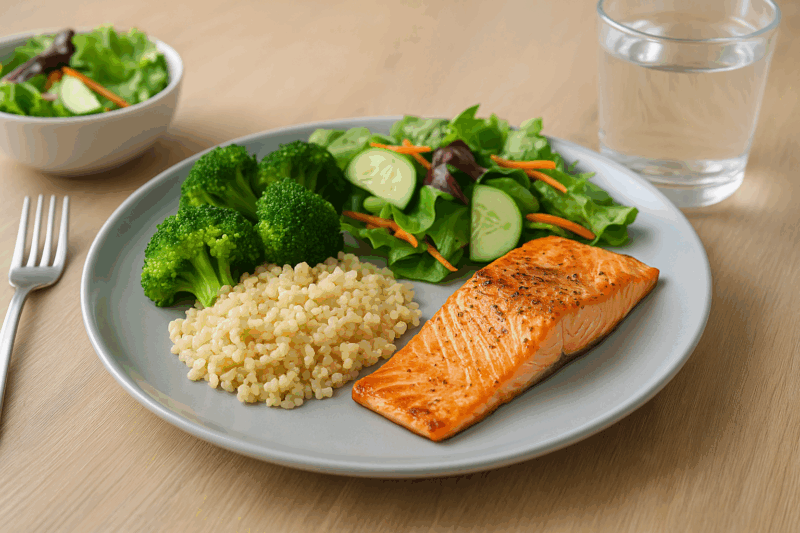
- Grilled salmon, quinoa pilaf, steamed broccoli, mixed-greens salad with olive-oil vinaigrette, water.
- Turkey chili, brown rice, side salad, orange slices, unsweetened iced tea.
- Tofu stir-fry with vegetables, soba noodles, edamame, fruit cup, water with lemon.
Working With Our Team
Your needs change from detox to later stages of care. Therefore, our clinicians, nurses, and kitchen staff coordinate your plan. We adjust portions, suggest easy options on low-appetite days, and provide education so you can keep eating well after discharge. As part of Aftercare & Recovery Support, we can also share simple grocery lists, budget-friendly recipes, and meal-planning tips.
Take the Next Step
A nutritious lunch in rehab is one of many small practices that protect your recovery. When combined with medical care, therapy, and community, it helps you feel steady enough to do the hard work of change. To learn more about life in our program or to start admissions, visit our Admissions page or contact us for a confidential conversation through our Contact page.